The phase preceding every targeted attack — every kidnapping,
every act of state-sponsored intimidation, every assassination —
is surveillance. It is the cheapest, most ubiquitous, and most
legally unprotected layer of modern conflict.
A thirty-dollar Bluetooth tracker, slipped into a child's
rucksack, hands an adversary the family's daily geometry. A
nine-dollar sub-GHz transmitter under a conference table
captures the next strategic decision. A hidden Wi-Fi camera in
a hotel suite records the journalist before the interview ends.
The infrastructure for tracking individuals is already deployed,
at planetary scale, in consumer-electronics form, mostly by
people with no accountability.
The market response has been to ship applications that say
"you're paranoid, there is nothing here," or hardware
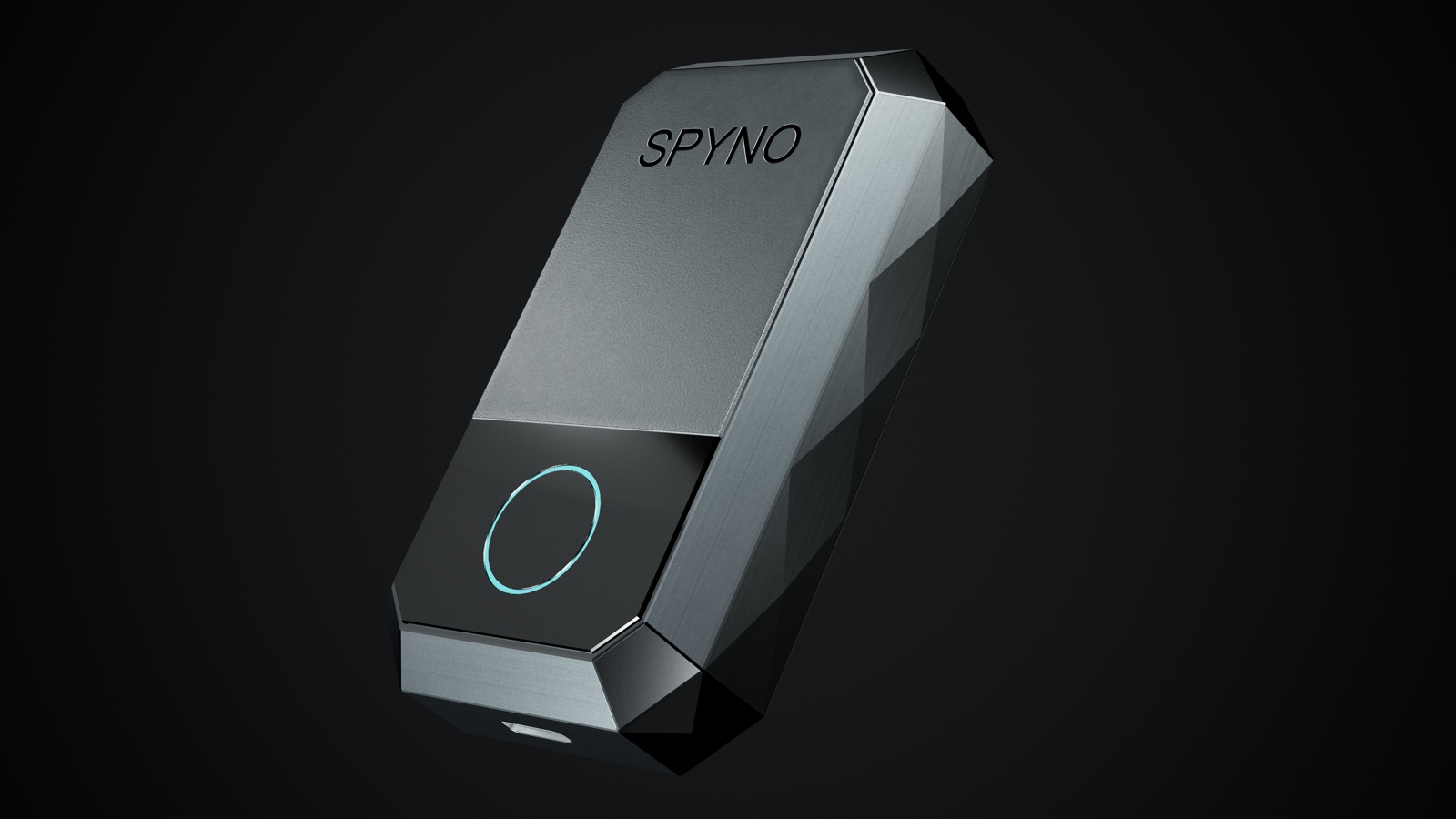
that breaks the law. Neither protects the operator. SPYNO is
the third option — a wearable that detects the digital
shadow following a person, and, within FCC §15.247,
Section 333 of the Communications Act of 1934, and ETSI
EN 300 328, surgically suppresses it.
Children at risk
BLE-class trackers slipped into a school rucksack reveal a
child's route home, the playground, the chambers of the
family residence. Apple's own stalking-detection arrives only
after the device has been tracking for hours.
Source: NCMEC field reporting, 2023-2025 Hostile environments
Investigative journalists, dissidents, NGO field officers
operate in places where surveillance is professional and the
adversary is patient. A wearable detector at the personnel
level closes the gap stationary sweep equipment cannot.
Source: CPJ & RWB security advisories Executives & infrastructure
Pre-attack surveillance of executives and critical-infrastructure
personnel is documented in DHS and FBI advisories as a
precursor to targeted violence. SPYNO breaks that chain at
the personnel level, where present countermeasures do not
reach.
Source: DHS NTAS, CISA 2024-2025 Lawful by architecture
Every active vector is targeted, subscription-gated, and
structurally distinct from broadband jamming. The same
architecture covered in our USPTO Counter-Terrorism Petition
to Make Special, filed under 37 CFR §1.102(c)(1).
USPTO Application 19/260,580